The Original Grazing School
for Women
A Fun Educational Event for Women in Agriculture
Rotational Grazing Basics for Small Cattle Operations in Alberta
October 4, 2026
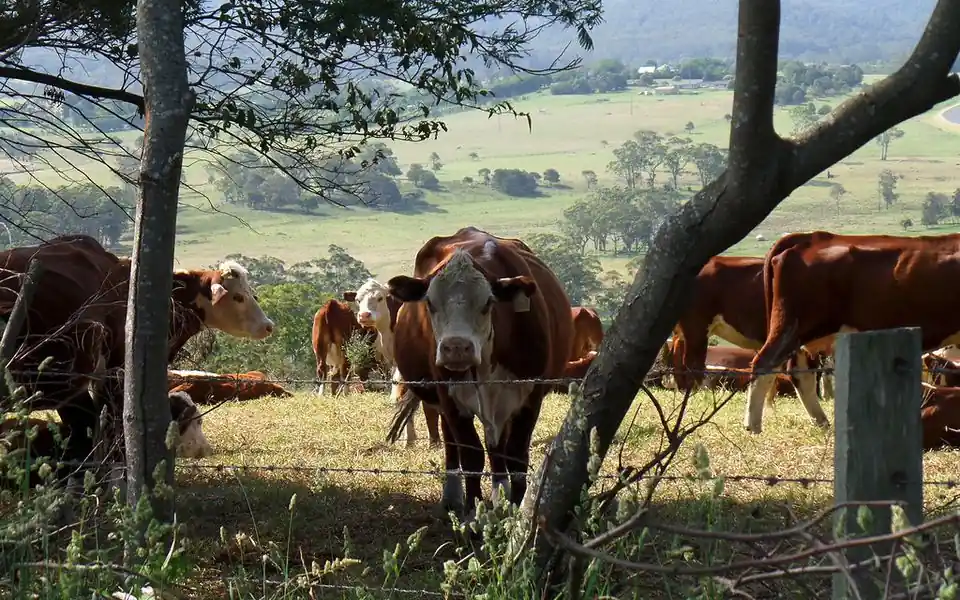
Rotational grazing means dividing pasture into smaller units and moving cattle through them, so each piece is grazed for a short stretch and then left alone to regrow. For a small herd in Alberta the appeal is practical: more even use of the grass you already have, longer recovery for plants between bites, and more room to manoeuvre when a dry summer arrives. It does not demand a big investment on day one. Most of what works on a 50-cow place comes down to water, a few fence lines and paying attention to grass height.
What rotational grazing changes on the ground
Under continuous grazing, a herd has the run of the pasture all season. Cows return again and again to the plants they like, nipping regrowth before it can rebuild, while less palatable species go rank in other corners. The result is a patchwork: overused spots near water and shade, underused ground at the far end.
A rotational grazing system breaks that pattern by controlling two things. One is how long the herd stays in an area, the grazing period. The other is how long that area gets before the animals come back, the recovery or rest period. Short stays mean a plant is bitten once or twice rather than repeatedly. Long recovery lets it rebuild leaf area and send energy back to its roots, and deeper roots reach more soil moisture and hold the soil together. That is why the payoff tends to show most clearly in dry years.
The term covers a wide range of intensity. Splitting one quarter section in two and alternating between the halves counts. So does giving a herd a fresh strip of grass behind polywire every morning. Both are rotational grazing systems; they differ in labour, infrastructure and how finely the grass can be managed.
Why the practice is common in Alberta
Alberta uses the practice more widely than any other province. In its 2021 Census of Agriculture, Statistics Canada reported that 30.5% of Alberta farms used rotational grazing in 2020, compared with 20.7% across Canada. Forage associations in the province, such as the Grey Wooded Forage Association in west-central Alberta, regularly cover grazing management at field days and in their extension work.
The benefits producers describe fall into a few groups:
- More grazing days from the same acres. Even use and better regrowth can lift carrying capacity, pushing back the date when purchased feed has to start.
- Soil health and water quality. Ground cover protects the soil surface, roots add soil organic matter, and manure is spread over the whole field instead of piling up around the dugout. Keeping cattle off creek banks while paddocks recover protects the water downstream.
- A better plant mix. Desirable grasses and legumes such as alfalfa get a chance to persist instead of being grazed out.
- Quieter cattle. A herd that is moved often gets used to people, gates and the daily walk to a new paddock.
Prairie grass keeps its own calendar
Much of the published advice on grazing systems comes from the UK, Ireland or New Zealand, where grass grows fast and a full rotation of three to four weeks is a common starting point. Those numbers do not travel well to the parkland and the prairie. The growing season here is short, much of the year's growth arrives between late May and early July, and regrowth slows sharply in the heat of July and August.
So recovery is measured in weeks to months rather than days. Thirty days can be enough during a wet June; later in summer, plants often need twice that or longer. With rest periods that long, a tame paddock may be grazed only twice in a season, and dry native range often needs a full year or more before it is ready again. A fixed schedule is a poor guide. A plant that has regrown full leaves, not just a few short blades, is ready to graze again.
Start with one fence and one water point
The simplest first step is to split a continuously grazed field into two parts and alternate between them. It sounds modest, but one side gets a full recovery while the other is in use, and you learn how fast your grass actually comes back. Case studies of Alberta producers published by the Alberta Agrisystems Living Lab and Canfax advise anyone planning to implement rotational grazing to start slow, partly because pasture improvements take years to show and partly because a system that grows too fast can wear out the person running it.
Before adding a second fence, look at the map with drinking sites in mind. Every paddock needs clean water, and a rotational grazing system should be built around it. Common options on small places include:
- one fixed trough that several paddocks share, each with its own gate or corner opening onto it;
- a laneway that lets the herd walk back to a dugout or well from each paddock;
- a trough on a summer line of surface pipe that is shifted from paddock to paddock as the cattle move;
- a solar pumping system drawing from a dugout or creek, so cows drink from a trough instead of wading into the source.
Check the supply as well as the layout. On a hot afternoon a whole herd can arrive at once, and the source has to refill the trough as fast as they drain it.
Permanent fence, temporary fencing, or a mix
Building permanent cross-fences before you know how the land behaves is the expensive mistake. A more forgiving pattern is a solid perimeter fence with portable electric wire or tape on step-in posts inside it. Temporary fencing lets you change paddock size from week to week, test layouts and correct errors without pulling a single post.
Once a rotational layout has proved itself over a few seasons, the most-used lines can be replaced with single-wire high-tensile electric fence, especially where a breakout would cause real trouble, such as next to a highway or a neighbour's crop. Plenty of operations never go fully permanent and keep temporary fencing for the lines they still move. Electric fence works only if cattle respect it, so train them in a small, well-built pen before turning them out behind one strand. Virtual fencing with GPS collars is another emerging option, though its per-head cost deserves a careful look on a small herd.
Working out paddock numbers and size
Paddock size follows from three figures: the amount of forage the herd eats per day, the amount of usable forage a paddock holds, and how many days you want animals to stay in it.
A common planning figure for daily dry matter intake is 2.5 to 3% of body weight. A 1,400 lb cow eating 2.5% needs about 35 lb of dry matter a day, so a herd of 50 needs roughly 1,750 lb. Calves eat little grass in May but a real share of it by August, so the herd's daily demand keeps creeping up.
Usable forage is not everything standing in the field. A long-standing prairie rule of thumb is "take half, leave half": plan for cattle to remove roughly half the growth and keep the remainder as residue that holds the soil under cover, traps snow and feeds the roots. Some of what is left behind will be trampled or fouled, so keep estimates conservative.
A grazing period of a few days suits most small herds. It is short enough that cows do not return to bite fresh regrowth and long enough that moves fit around other work. The number of paddocks in a rotational plan then depends on the recovery you want. With three-day stays and 45 days of recovery, you need about 16 paddocks.
Few small operations start with 16, and they do not need to. Eight paddocks used for about a week each still give far more recovery than season-long access, and they can be subdivided later. At that point the stocking rate, meaning the number of animals the whole area supports over a season, becomes the real limit. No grazing system fixes a pasture that is simply carrying too many cows.
Reading the grass during the season
Height is the easiest guide. Many producers set an entry height and an exit height: the herd goes in when the stand has regrown well and comes out when it has been grazed to about half its height, or roughly three to four inches on tame pasture. That residue protects the growing points and leaves enough leaf for quick regrowth. Paddocks grazed down to the crowns have to rebuild from stored reserves and are slow to recover.
Through the summer, expect to adjust:
- In a fast spring flush, grass growth outruns the herd. Paddocks that head out before the cattle reach them can be baled or simply left standing for fall.
- In a dry spell the problem flips. Moving cattle on a fixed calendar only brings them back to paddocks that have not regrown, so hold them longer where they are or bring a hayfield aftermath into the rotation.
- Keep simple notes: date in, date out, height in and out, head count. Two or three seasons of records say more about carrying capacity than any published guideline.
Stockpiling deserves a deliberate plan. A pasture that cattle do not graze until calving or late fall extends the grazing season and cuts the days spent on stored feed.
Hurdles that small operations face
A 30- or 50-cow herd on scattered quarters has different problems from a large ranch on one block. Every parcel needs its own fence and a drinking source, and each move may mean loading a trailer. Short leases make both owner and tenant wary of paying for fence and water, which makes rotational grazing on rented land harder to justify. Labour is often the tightest limit, especially when the same people also run a grain operation, hold an off-farm job or raise a young family.
Any grazing system has to fit the people running it. Plan the calendar around the farm's own peaks: before seeding and haying, set up paddocks that can hold the herd for a week or more, and save the short, frequent moves for quieter stretches. Set up gates and laneways so one person can move cattle alone; calling a herd to fresh grass is far easier than pushing it.
Help with fence and water costs
Cross-fencing and off-site watering are the main expenses, and Alberta has offered cost-share for both under the Sustainable Canadian Agricultural Partnership. The province's Resilient Agricultural Landscape Program listed rotational grazing on tame pasture or native rangeland among its pasture management practices, with cross-fencing required and portable water systems, pumps and solar power among eligible items. The program closed to new applications after strong demand. It required a current Environmental Farm Plan, as much provincial support does. Your county's agricultural fieldman and local forage association can say which programs are open in a given year; Saskatchewan producers have their own options under the same federal-provincial partnership.
What to expect in the first seasons
Expect the first year to teach more than it produces. Grass that has been grazed season-long for decades will not change after one summer of rest, and a dry year can hide progress entirely. What usually shows first is control: knowing where the herd is, how many grazing days each piece of land gives, and the amount of feed left heading into fall. Deeper roots, more litter on the soil surface and a better species mix follow over several seasons, for those who stay with a rotational pattern and keep their notes.