The Original Grazing School
for Women
A Fun Educational Event for Women in Agriculture
Soil Health 101: Cover Crops Grazing and Livestock Integration
October 14, 2026
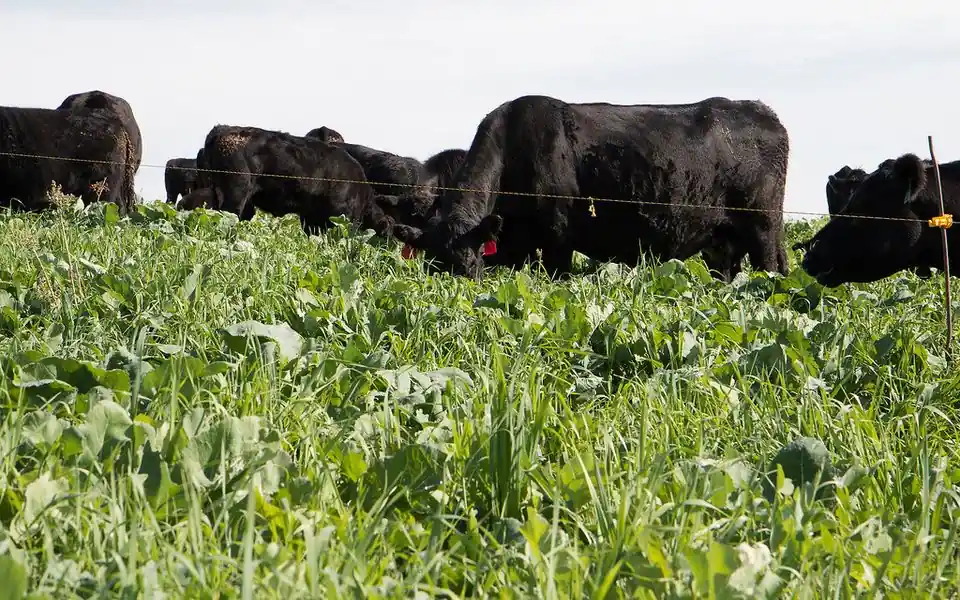
A field seeded to a mix of rye, peas and turnips after harvest does two jobs at once. Roots and residue protect and feed the soil, and the same stand can carry cows for weeks when native grass is done for the year. That overlap matters on Prairie farms with both cropland and a herd. With cover crops, grazing livestock turn part of the seed cost into feed, and their manure returns most of the nutrients they eat to the field.
Why the herd changes the economics
Cover crops have become increasingly common on grain farms, but each stand is a cost with a slow payback. A four-year trial by North Dakota State University's animal sciences and natural resource sciences researchers, in a semiarid climate much like the southern Prairies, found that the financial benefits of a cover crop rarely arrive in the short term without livestock. Even a brief grazing period halved what the cover cost to establish, and a longer one would give a full return. Yet in a survey the research team cites, only 24% of farmers reported grazing their covers.
The plots rotated through millet hay, soybeans and two corn crops, with grazed, ungrazed and no-cover treatments. The team saw no significant change in soil health after three years and estimated that five years are needed in a dry climate before effects show. Winter rye also held back kochia, a weed that resists glyphosate. Livestock production is what keeps the practice affordable while that slow, long-term work goes on underground.
What Prairie growers report
A University of Manitoba research team ran the 2020 Prairie Cover Crop Survey across all three provinces. The 281 farms in the survey report grew 102,539 acres of covers that year, and just over half of them kept beef cattle. Improved soil health led the benefits, named by 54%, and grazing was the most common way to end a stand (46%). The main obstacles were the familiar ones: a short growing season (30%), low fall moisture (27%), added cost (25%) and herbicide choice (21%).
Choosing a mix for cattle
Most covers are seeded as "cocktails" of five to twenty species. The Beef Cattle Research Council lists clover, forage brassicas such as turnip and radish, barley and peas as common ingredients. Because each species matures at its own pace, a blend spreads forage production over a longer window and gives a more varied diet than any single crop. Adding one or more legumes builds nitrogen for the next crop in the rotation.
Match the mix to the livestock that will eat it. A lactating cow needs more protein than a dry one, so a legume-rich stand suits pairs, while dry cows have more leeway to graze cereals and brassicas. Seeding rate and the number of species drive most of the seed bill, which is a good reason for producers to start simple.
Spring-seeded fall rye is one of the easiest entry points. Saskatchewan's agriculture ministry notes that this hardy winter cereal grows in almost every part of the province, is ready about six weeks after seeding or once it reaches six inches, and peaks in mid to late summer, later than other cereals. Its fall rye grazing guide recommends Hazlet and Prima for pasture, seeding at 55 to 110 lb per acre, with custom-seeded costs reported at about $60 per acre.
Fitting covers into a short season
Timing matters more here than in the corn belt. With few frost-free days, the best windows follow an early-harvested cereal; barley, spring wheat and oats were the crops most often grown ahead of a cover in the survey. Other options use the whole season: seed a winter cereal in spring for summer and late fall use, or cut a first crop for silage or greenfeed and graze the growth of a second seeding. Overwintering cereals also allow a second turn: seed cover crops, grazing them after harvest and again the following spring. Check herbicide labels from the previous crop: some carry long grazing restrictions or can stop a new stand.
Feed risks to manage
Lush annual forage is not the same as pasture for livestock, and grazing cover crops brings a few problems of its own:
- Nitrates. Cereals and brassicas pull nitrate from the soil and can store it, especially after drought, frost or hail. Test before turnout, and where nitrogen levels are high, the province suggests waiting about 14 days after a stress event.
- Sulphur. Brassicas can also build up excess sulphur, depending on soil fertility.
- Prussic acid. Summer annual species such as sorghum and sudangrass carry higher levels in new growth and after frost; extension advice is to wait until plants are 18 inches tall and a week past a frost.
- Low fibre and bloat. Regrowth is often low in fibre, and legume-heavy stands can cause bloat. Straw bales or slough hay in the field slow passage through the rumen.
Introduce cattle gradually, ideally full from hay or grass, and watch for incoordination, reduced intake or a faster heart rate. Work out a testing and health plan with your veterinarian before the first move and treat the field like any other feeding program.
Grazing without damaging the soil
Hooves on wet ground undo much of what the roots build, so management matters as much as the mix. Settle logistics first: a stubble field far from the yard may have no boundary fence or water, and a month of hauling water can cancel the feed savings. Once the livestock are on, short moves behind a temporary electric wire spread manure and limit trampling. Leaving about 6 inches of residual protects the surface and, where nitrates are a concern, keeps cattle off the lower stems. The riskiest time is spring on overwintered cereals, when snowmelt leaves soil saturated; keep cattle off until it firms up.
Keeping track of results
Integrated cropping systems are hard to judge by eye, so records support better management decisions. Write down grazing days, the bales you did not need and the cost of seed and seeding, then pair those with soil tests from the same spots every few years. The feed savings appear in the first season. The soil benefits take longer, and they are the ones that show whether integrating cover crops, grazing and cattle is working on your land.