The Original Grazing School
for Women
A Fun Educational Event for Women in Agriculture
Winter Bale Grazing: Costs, Benefits and Common Mistakes
October 9, 2026
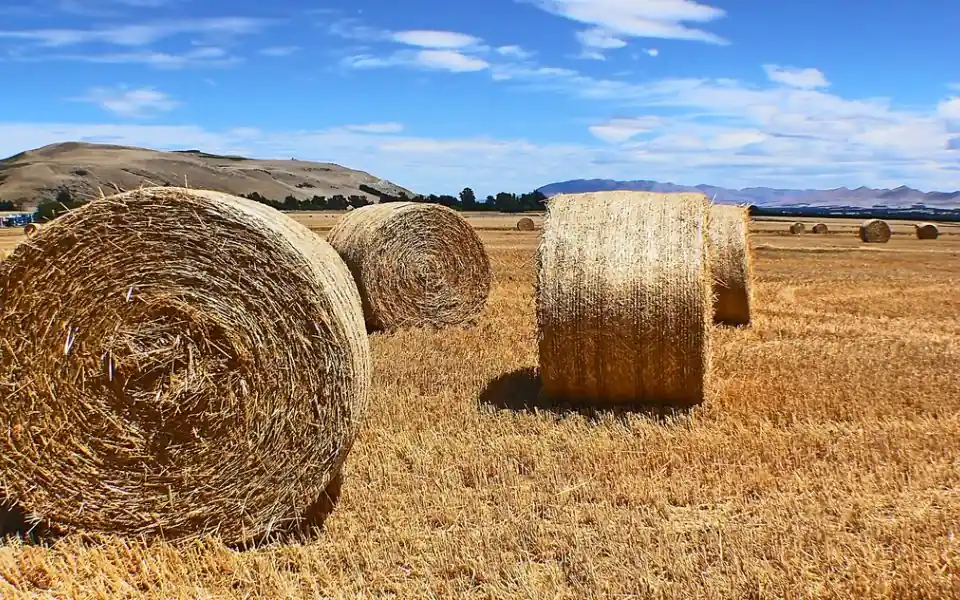
Bale grazing turns the winter feeding routine around. Rather than bringing hay to the herd each morning with a loader and bale processor, the hay is set out on a field in summer or fall, and cattle are given access to a few days' supply at a time behind an electric wire. On the Prairies, where winter feeding is often the largest single cost of keeping a cow, the method can cut fuel, machinery and labour costs while leaving manure and nutrients on the soil. Most of its problems come from a handful of avoidable mistakes.
How the system works
Set-ups vary, but all are a form of outwintering. At the intensive end, bales are hauled to a chosen site and placed in rows on a grid, and the herd is limited to three or four days of feed at a time. At the extensive end, cattle are turned onto the hayfield and eat each bale where the baler dropped it, at two to four per acre, with several weeks' allotment opened at once. Alberta has embraced in-field feeding more than any other province: in the 2021 Census of Agriculture, 28.9% of Alberta farms reported in-field winter grazing or feeding.
Where the savings come from
Most of the money saved is in yardage costs rather than feed. Making or buying the hay still costs the same, but daily feeding, bale hauling in the snow and spring manure spreading largely disappear. For many farm families the biggest benefit is the hours: a wire move every few days fits into short January days far more easily than a daily feeding round.
Published figures vary with the set-up. One South Dakota rancher put his cost of hauling and rolling out hay at about 14 cents a head per day, against roughly 3 cents for bale grazing, before labour. In the UK, where beef and sheep farmers commonly use winter housing, an AHDB-funded project worked with seven beef farms practising outwintering on bales. On the one farm with a full partial budget, the analysis showed a net benefit of about £1.58 per head per day, roughly half its housing cost, and the participating farms reported less labour overall. Housing is rare on the Prairies, where the usual comparison is a drylot or wintering yard, but the same items appear on both sides of the ledger.
The costs that are easy to miss
New costs to set against the savings:
- electric fence, posts, energizers and, where there is no power, solar units;
- feed waste, which Saskatchewan guidance budgets at about 15%;
- a winter water system if the site lacks enough soft snow;
- deer and elk eating and fouling bales placed early in the fall;
- extra handling if part of the supply must come from the stack yard mid-winter, which is difficult in deep snow.
Published savings come from other farms with other hay prices and herd sizes. A Prairie farm budget should set your own wintering yard against your own bale-grazing field, counting one-time costs, including new fence and a water system, separately from yearly ones.
The benefit to the field
Manure, urine and leftover hay stay where they fall, and the nutrient return is far higher than with hauled manure. Research at the Western Beef Development Centre in Lanigan, Saskatchewan, found that grass recovered 34% of the nitrogen in bales fed on pasture over the following two growing seasons, compared with 1% when the same feed went through confinement feeding and mechanical spreading. A three-year North Dakota State University project on the impacts of bale grazing found more grass, higher crude protein and more soil nutrients on bale-grazed ground, so forage quality and soil health both gained. So the bale grid is a fertility decision as much as a feeding one: place it on a worn-out hayfield or run-down tame pasture, not on ground that is already rich.
Setting bales for an even result
The provincial Saskatchewan site-selection guidance favours seeded perennial pasture or hay land, ideally with a sod-forming grass such as smooth brome, on or near the field where the hay was made, with wind shelter and perimeter fence already in place. For alfalfa-grass hay bales of about 1,300 lb, it suggests no more than 25 bales per acre, which works out to a grid on 40-foot centres. In a North Dakota study, spacing at the wider end, 40 to 50 feet apart, appeared to spread cattle out and reduce leftover hay.
To size each allotment, the same guidance assumes cows eat hay of about 10% moisture at 2.6% of body weight daily. A herd of 100 head averaging 1,400 lb therefore eats around 3,640 lb a day, or about 4,190 lb once 15% waste is added. With a move every three days, each strip needs roughly 12,560 lb of hay, so setting bales in rows sized to that amount makes it simple to move electric wire along the grid. Feed testing is recommended before feeding starts, and body condition should be watched as temperatures fall and pregnancy advances.
Common mistakes
- Bale grazing on the wrong ground. Native prairie is not recommended, because added fertility and weed seed favour invaders. Riparian areas, slopes draining into a water source, coarse soils over shallow aquifers and fertile low spots are also poor choices.
- Opening too much at once. Larger allotments mean more trampled and soiled hay.
- Mixing feed quality carelessly. If good hay and straw are offered together each day, dominant cows take the best. Allocating several days' mix at once gives every animal a fair turn at the better feed.
- Leaving thick residue. A layer more than about four inches deep can injure alfalfa and leave dead spots, especially on bunchgrass stands.
- Forgetting twine and spring. Plastic twine left behind fouls equipment, and grazing during spring thaw causes pugging of the soil surface.
Start with a trial strip
Farmers new to the method need not commit the whole hay supply. Set out part of it on one field near the yard, where water and checks are easy. You will learn how your cattle clean up bales, how the wire holds in deep snow and how much residue remains. The benefits of bale grazing show up the next summer, so record where the bales sat and check that ground in July.